Equipment failure isn’t always the biggest danger in industrial environments. Often, the real threat comes during maintenance—when machines are shut down, serviced, or repaired. Without proper controls, unexpected startup or release of stored energy can cause serious injury or fatalities. That’s where lockout tagout (LOTO) comes in. It’s not just a protocol; it’s a lifesaving system designed to isolate hazardous energy sources and keep workers safe.
Yet, despite clear OSHA standards, LOTO violations remain among the most cited safety infractions. Why? Because many teams misunderstand the process, skip steps, or rely on outdated methods. This guide cuts through the confusion and delivers a clear, actionable framework for how to lockout tagout effectively—backed by real-world use cases, common pitfalls, and compliance essentials.
What Is Lockout Tagout (LOTO)?
Lockout tagout is a safety procedure used to ensure that machines or equipment are properly shut off and cannot be restarted during maintenance or servicing. It involves two key actions:
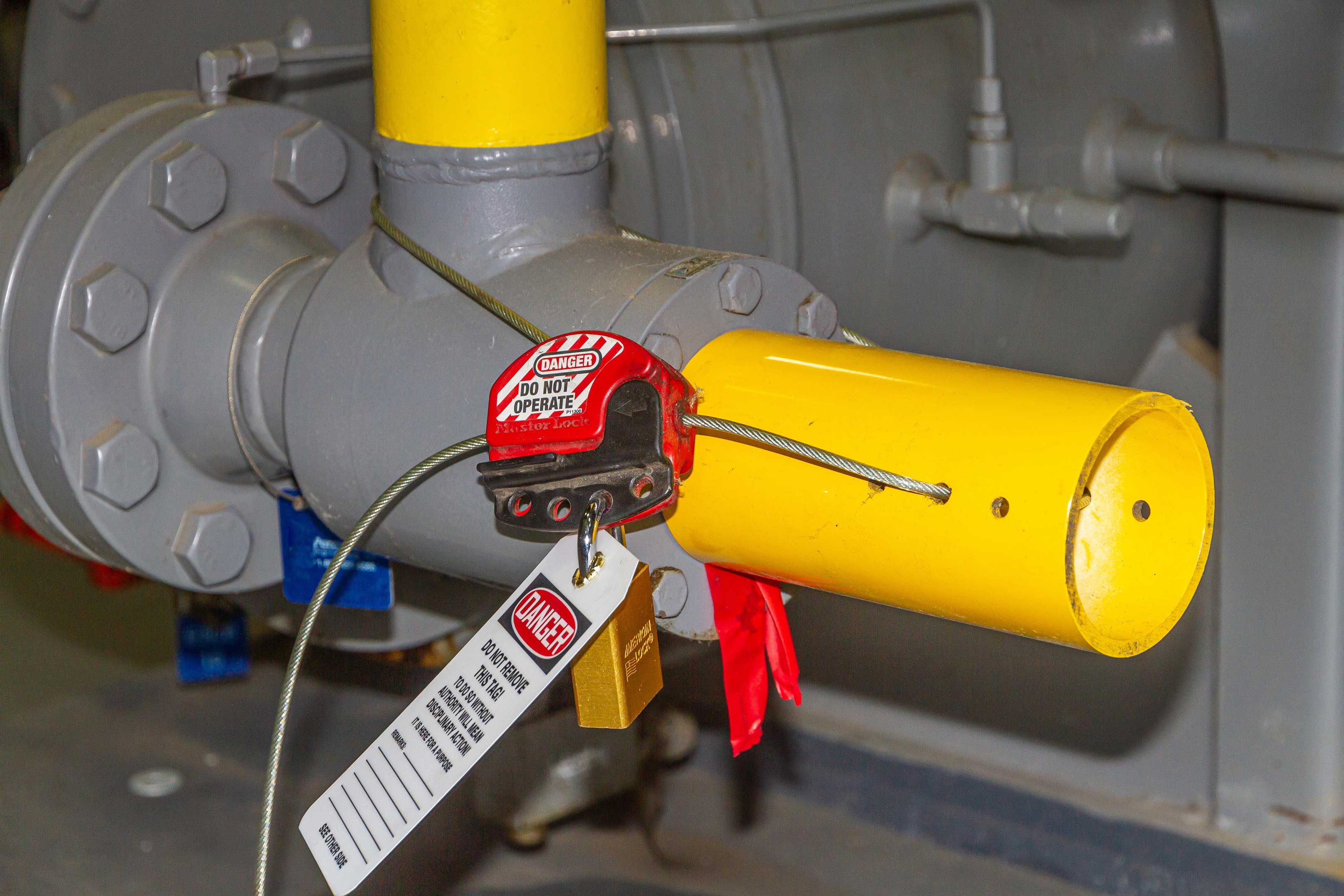
- Lockout: Physically securing an energy-isolating device (like a circuit breaker or valve) with a lock.
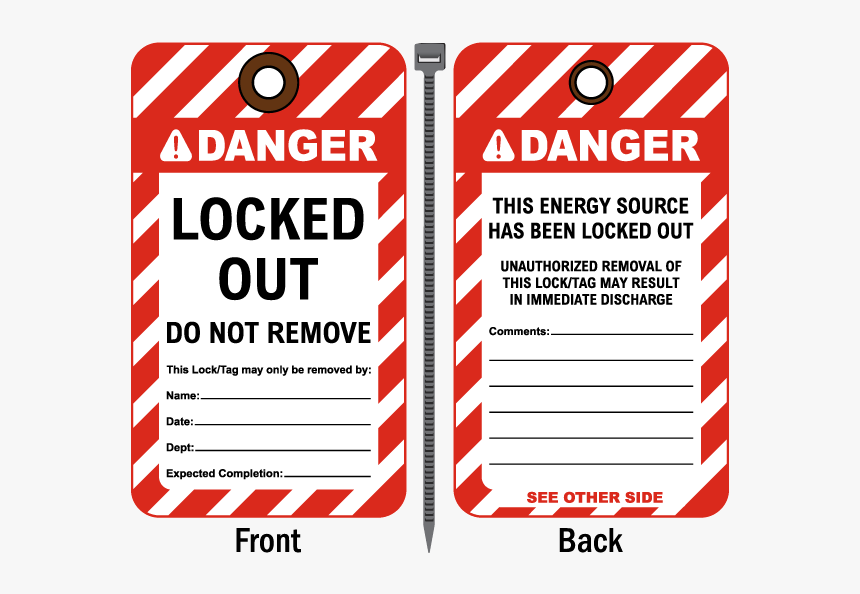
- Tagout: Attaching a warning tag to the locked device, indicating who locked it, why, and when.
The goal is simple: prevent accidental energization. But the execution requires precision. LOTO applies to all forms of energy—electrical, mechanical, hydraulic, pneumatic, chemical, thermal, and gravitational.
Example: A technician servicing a conveyor belt must lock out the motor disconnect and tag it to prevent someone from unknowingly re-energizing the line.
Why Lockout Tagout Matters
Every year, hundreds of workers are injured or killed during equipment servicing due to improper energy control. OSHA estimates that compliance with LOTO procedures prevents nearly 120 fatalities and 50,000 injuries annually.
Beyond compliance, the real value is cultural. A consistent LOTO program signals that safety is non-negotiable. It reduces downtime from incidents, protects liability, and fosters accountability.
But poor execution undermines the entire system. Common failures include:
- Using group locks incorrectly
- Failing to verify zero energy
- Not training authorized vs. affected employees
- Relying solely on tags without locks
Each of these shortcuts increases risk exponentially.
Who Is Responsible for LOTO?
Two roles define LOTO responsibility:
#### Authorized Employees These are workers trained to implement the energy control program. They physically lock out machines and perform servicing. Only they can apply or remove locks and tags.
#### Affected Employees These are operators or others who use or work near the equipment but don’t service it. They must understand the purpose of LOTO and know not to bypass or remove devices.
Real-World Scenario: In a packaging plant, the maintenance technician is authorized. The line operator who runs the shrink wrapper is affected. Both need training—but different levels.
Employers must provide initial and annual retraining. Documentation is mandatory and often audited.
The 7-Step LOTO Procedure (OSHA-Compliant)
Follow this sequence exactly. Skipping or reordering steps invalidates the procedure.
#### Step 1: Prepare for Shutdown Identify the type and magnitude of energy involved. Review the machine-specific LOTO procedure. Gather necessary locks, tags, and tools.
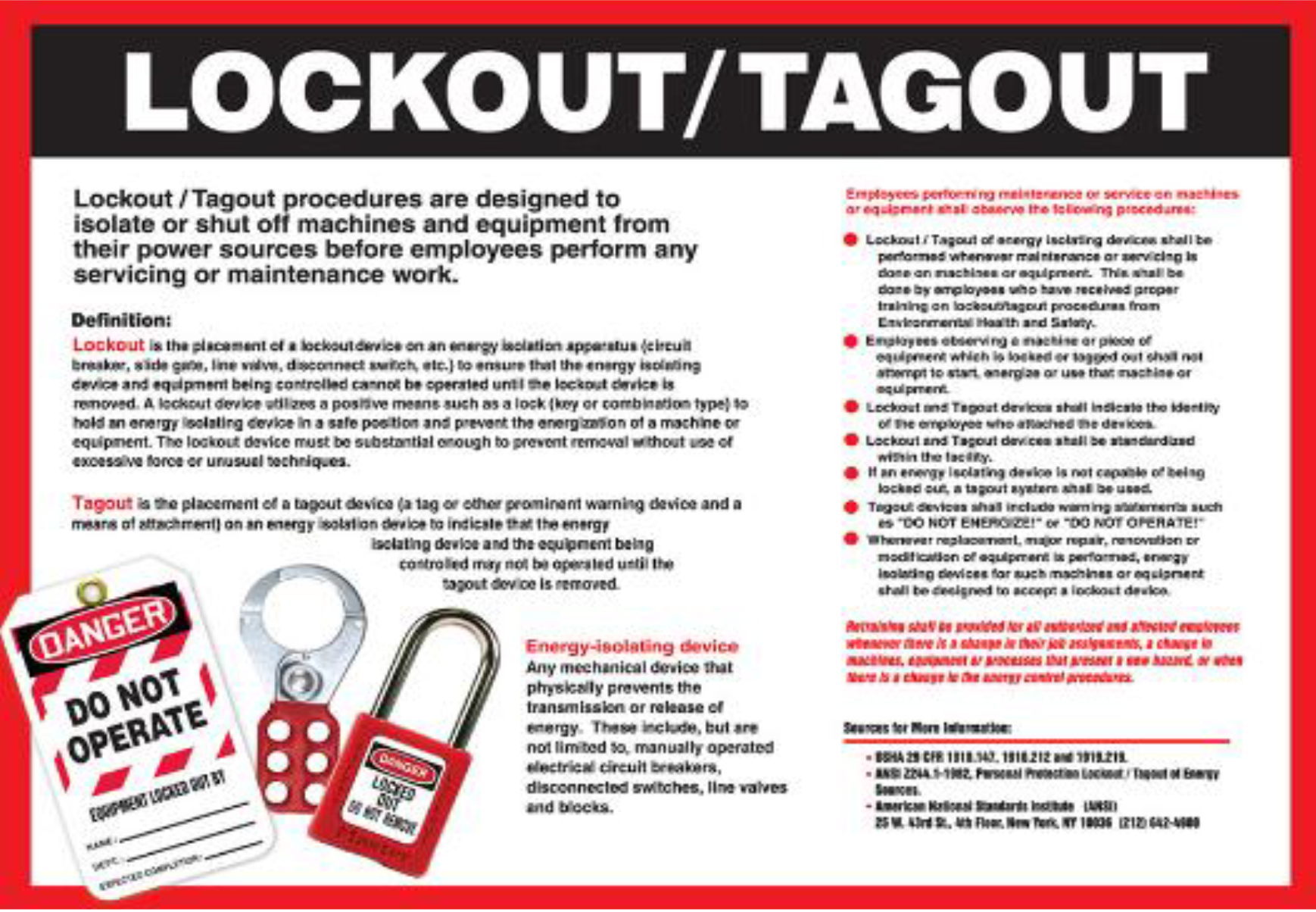
Tip: Use pre-filled LOTO kits labeled for specific machines to reduce errors.
#### Step 2: Notify Affected Personnel Inform all affected employees that servicing will occur and why the machine is going down.
#### Step 3: Shut Down the Equipment Use normal stopping procedures—never rely on emergency stops as the primary shutdown method.
#### Step 4: Isolate the Energy Source Locate and operate all energy-isolating devices. This could mean flipping breakers, closing valves, or blocking moving parts.
Common Mistake: Forgetting secondary energy sources. A hydraulic press may store pressure even after power is cut. Bleed lines or block cylinders as needed.
#### Step 5: Apply Locks and Tags Each authorized worker applies their own lock and tag. Group lockout boxes may be used for multiple workers, but each person retains their key.
- Locks must be durable, standardized, and identifiable.
- Tags must include: employee name, date, reason, and contact info.
#### Step 6: Release Stored Energy Relieve or block residual energy. This includes: - Draining capacitors - Depressurizing lines - Allowing rotating parts to stop - Cooling hot surfaces
Critical Check: Verify zero energy. Test the controls to ensure the machine won’t start.
#### Step 7: Perform Maintenance and Remove LOTO Once work is complete: - Ensure tools are removed - Re-energize only after clearing the area - Remove locks and tags personally—never let someone else do it - Notify affected employees before restart
Machine-Specific LOTO Examples
Not all equipment is the same. Procedures must be customized.
#### CNC Machine - Energy sources: Electrical, hydraulic, pneumatic - Lockout points: Main disconnect, hydraulic power unit, air supply valve - Stored energy: Spindle inertia, hydraulic pressure - Special step: Engage spindle brake and bleed hydraulic lines
#### Industrial Oven - Energy sources: Electrical, gas (chemical), thermal - Lockout points: Circuit breaker, gas shutoff valve - Stored energy: High heat in chamber - Special step: Allow cooldown period (e.g., 2 hours) before entry
#### Conveyor System - Energy sources: Electrical, mechanical - Lockout points: Motor starter, drive coupling - Stored energy: Gravity-fed sections - Special step: Install mechanical barriers on inclines
Each of these requires a written, site-specific procedure—no exceptions.
Common LOTO Mistakes (And How to Avoid Them)
Even experienced teams make errors. Recognizing these pitfalls is half the battle.
| Mistake | Risk | Solution |
|---|---|---|
| Using one lock for multiple workers | Unauthorized re-energization | Use hasp + multiple locks or group lockbox |
| Skipping stored energy release | Unexpected movement | Verify zero energy via test run |
| Tag-only systems without locks | Easy to remove | Use locks wherever feasible |
| Incomplete training | Misunderstood roles | Separate training for authorized vs. affected |
| Poor lock management | Lost keys, unclear ownership | Issue individual locks with employee names |
Insight: A lock without a key in the owner’s pocket is a false sense of security.
LOTO Equipment: Tools You’ll Need
Every authorized employee should have access to standardized LOTO devices. Here’s what’s essential:
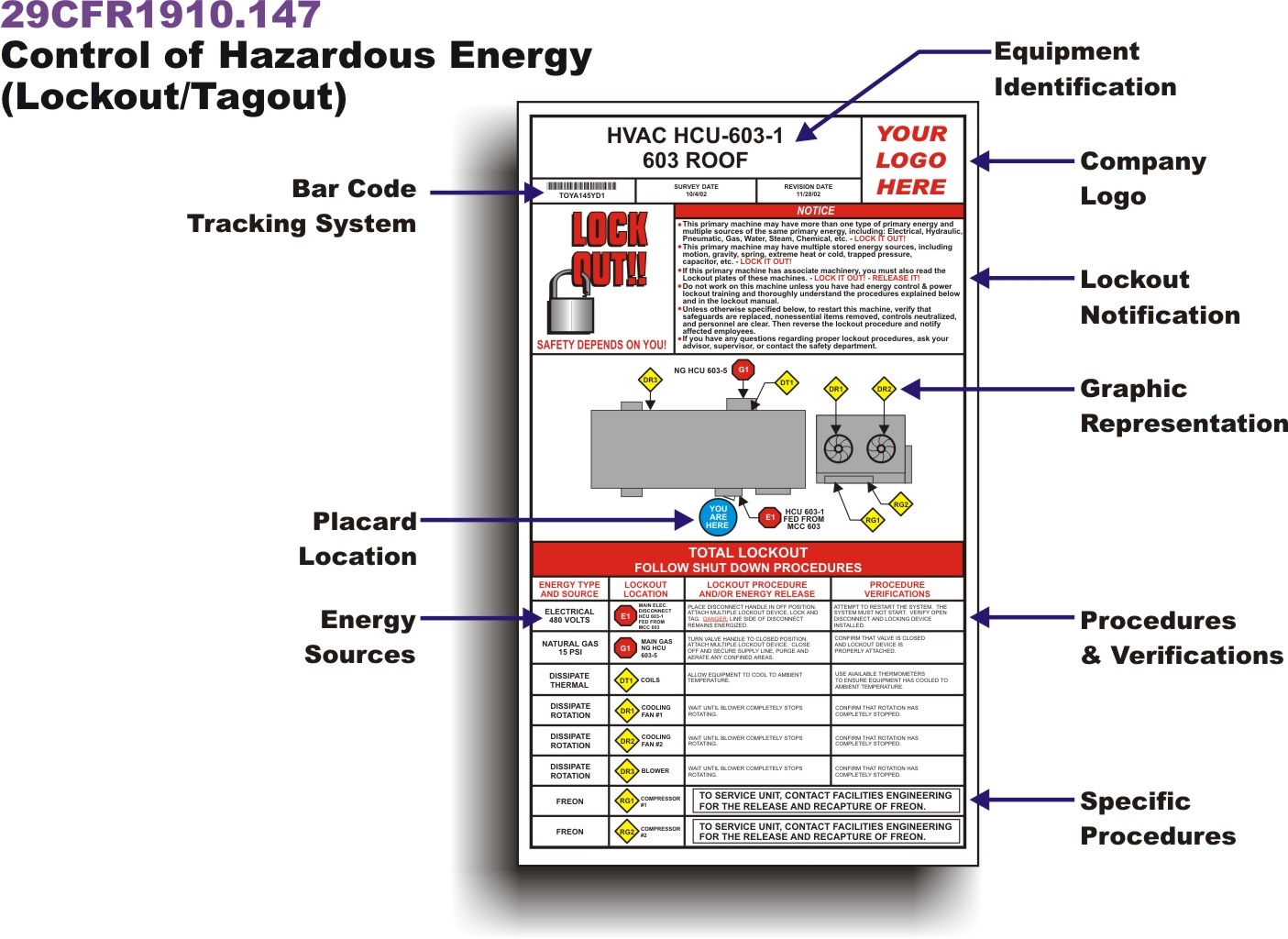
- Personal Locks – Durable, keyed-alike or keyed-different locks (preferably padlocks with non-conductive bodies).
- Danger Tags – Pre-printed or customizable tags with fields for name, date, and reason.
- Lockout Hasps – Allows multiple locks on a single isolation point.
- Group Lockout Boxes – Centralized station where individual locks are applied during team work.
- Energy Isolation Devices – Valve locks, circuit breaker locks, plug locks, and bolt locks.
Pro Tip: Use color-coded locks—red for electrical, blue for pneumatic—to reduce confusion.
Avoid makeshift solutions like zip ties or tape. OSHA does not accept them as lockout devices.
When LOTO Doesn’t Apply (And What To Do Instead)
LOTO isn’t universal. OSHA allows exceptions under specific conditions:
- Minor tool changes or adjustments during normal production (e.g., clearing a paper jam) if they're routine, repetitive, and integral to operation.
- Hot taps on pressurized systems under written controls.
- Corded portable tools unplugged and within the employee’s immediate control.
In these cases, alternative protective measures—like machine guarding or procedural controls—are required.
Example: A mechanic unplugs a bench grinder, verifies it’s unplugged, and performs a quick blade change. Since the plug is within sight and control, full LOTO may not be needed.
But when in doubt, lock it out.
Building a Sustainable LOTO Program
Compliance isn’t a one-time audit fix. It’s an ongoing system. Here’s how to maintain it:
- Document every procedure – One for each machine or energy type.
- Conduct periodic inspections – At least annually. Watch an authorized employee perform LOTO and verify adherence.
- Audit your logs – Review lockout records, training completion, and incident reports.
- Update for changes – New equipment? Modified process? Revise the LOTO procedure.
- Foster accountability – Encourage peer checks and near-miss reporting.
A strong LOTO program doesn’t just avoid fines—it prevents life-altering injuries.
Final Thoughts: Safety Is a Process, Not a Procedure
Knowing how to lockout tagout is only valuable if it’s done right—every time. It’s not bureaucracy. It’s a deliberate, disciplined approach to protecting human life. From the technician turning a valve to the supervisor verifying compliance, each step matters.
Start by auditing your current practices. Are procedures written? Are locks available? Is training documented? Fix the gaps. Then reinforce the culture. Make LOTO as routine as wearing a hard hat.
When the machine hums back to life, everyone should walk away—unharmed and aware.
FAQ
What is the difference between lockout and tagout? Lockout uses a physical lock to prevent energizing; tagout uses a warning tag. Lockout is preferred because it provides positive control.
Can multiple people use the same lock? No. Each authorized employee must apply their own lock. Use a hasp or group lockbox for team work.
Do you need to lockout if the equipment is off? Yes. “Off” doesn’t mean isolated. Energy can still be present or accidentally restored.
Who can remove a lockout device? Only the authorized employee who applied it. In absences, a formal removal procedure with supervisor approval is required.
Are electronic lockout systems acceptable? Yes, if they provide equivalent protection—like electronic locks with individual access codes and audit trails.
Do battery-powered devices need LOTO? Yes. Remove or disconnect batteries and lock the compartment if accessible.
How often should LOTO procedures be reviewed? At least annually, or whenever equipment, processes, or personnel change.
FAQ
What should you look for in How to Lockout Tagout: A Step-by-Step Safety Guide? Focus on relevance, practical value, and how well the solution matches real user intent.
Is How to Lockout Tagout: A Step-by-Step Safety Guide suitable for beginners? That depends on the workflow, but a clear step-by-step approach usually makes it easier to start.
How do you compare options around How to Lockout Tagout: A Step-by-Step Safety Guide? Compare features, trust signals, limitations, pricing, and ease of implementation.
What mistakes should you avoid? Avoid generic choices, weak validation, and decisions based only on marketing claims.
What is the next best step? Shortlist the most relevant options, validate them quickly, and refine from real-world results.